
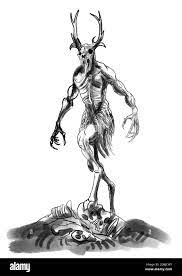
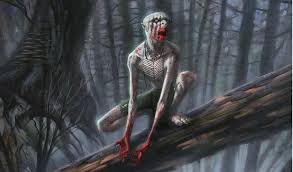
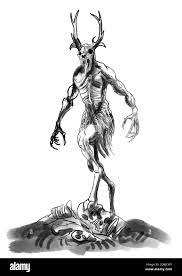
The Wendigo is an iconic creature from Native American folklore. A hideous cannibalistic creature that embodies the taboos of the northern and Canadian tribes. Starting as a person who has been corrupted by eating human flesh, the Windigo/ Wendigo, whitiko, chenoo, or atoosh is a creature from the Algonquian-speaking people. It was most notable in the Cree and Ojibwe tribes. After a person resorts to cannibalism, they turn into a beast that they say has a heart of ice and a pang of never-ending hunger for human flesh. The smell of rot and decay that follows it wherever it may be. It is very tall with long fangs, yellowish eyes, and long claws. It may have human characteristics with rotting skin and matted hair.
The Wendigo is an apex predator, it never stops the hunt and has the intelligence of a human. If you manage to get away, you will often have lost your mind due to the trauma of running into the beast. Encounters of the creatures go very far back. Some of the first written decimations go back to the early 1700s. The HBC or Hudson Bay Company was in the fur trade. This means they were often in the deep woods and had run-ins with the Wendigo. It got so bad that they worried about how this creature may disrupt their trade.
As a result of what the creature represents, it has its mental disorder named after it. Wendigo psychosis is a mental illness that makes a person crave human flesh or causes the fear of becoming a cannibal. Some of the common symptoms were melancholy, agitation, social isolation, and aloofness, while they also could see their condition erupt into a full-fledged obsession with murdering other humans and consuming their flesh.
If you think about the Wendigo, you can see it as the embodiment of harsh winters. Harsh winters for the Native Americans and many other groups could lead to the horror of cannibalism to survive.




 northamericanmysteries.com
Leave a comment