

Located in Northern New Mexico, the small, artistically rich town of Taos has been at the heart of a peculiar phenomenon for decades. Known as the “Taos Hum,” it has confounded residents, scientists, and curious visitors alike, earning it a prominent place in the records of unexplained auditory phenomena.
The Taos Hum, first reported in the early 1990s, is a low-frequency humming or buzzing noise that is heard by a small percentage of the local population. Descriptions of the sound vary from person to person, ranging from a faint drone, akin to a running refrigerator, to a pulsating, diesel engine-like rhythm. What’s more, the hum seems to be more perceptible at night, and disturbingly, for those who can hear it, the sound seems inescapable, permeating homes and proving immune to typical noise-canceling strategies.
What makes the Taos Hum an enduring mystery is not just the fact that only a select group of people can hear it, known as “hearers,” but also that despite multiple investigations, the source of the hum remains elusive.
In 1993, in response to escalating public concern, the University of New Mexico, in conjunction with Sandia National Laboratories, initiated an investigation to decipher the Taos Hum. Surprisingly, despite using highly sensitive equipment designed to capture low-frequency sound, the team was unable to detect any noise that could account for the hum reported by the residents.
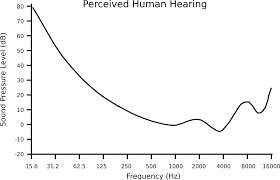
Later efforts included an investigation by the Taos Hum Study at the University of New Mexico and an examination by the House Committee on Science in 1994. Despite these concerted efforts, none could definitively locate the source of the sound or conclusively identify its nature.
Numerous theories have been proposed to explain the Taos Hum. These include local industrial equipment, distant highway noise, tinnitus (a perception of noise or ringing in the ears), electromagnetic waves, and even covert government operations. However, none of these theories have been proven, and the Hum continues to perplex both scientists and residents.
The phenomenon is not restricted to Taos alone. Similar humming noises have been reported in places around the world, including Bristol in England and Windsor in Canada, creating a broader category of phenomena known as “worldwide hums.”
As of now, the Taos Hum continues to remain a puzzling and somewhat unnerving enigma. For those affected, it’s a disturbing and relentless element of their daily lives. For the scientific community, it’s a challenge that’s yet to be overcome, making the Taos Hum a captivating mystery in the realm of auditory phenomena.





 northamericanmysteries.com
Leave a comment