
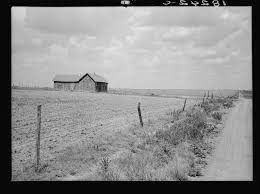
On July 7, 1947, a mysterious event took place in the quiet, dusty town of Roswell, New Mexico, which ignited one of the longest-standing debates in modern history. The ‘Roswell Incident,’ as it has been famously named, is arguably the most controversial, studied, and puzzling UFO encounters ever recorded. Today, we explore this peculiar occurrence and its enduring legacy on popular culture, science, and government conspiracy theories.
The narrative begins with a local rancher named William Brazel. Following a thunderous storm, Brazel discovered peculiar debris scattered over his sheep ranch in Lincoln County, New Mexico. The remnants included sticks, foil reflectors, rubber strips, and heavy, glossy paper-like material. Intrigued and baffled, he alerted Sheriff George Wilcox, who, in turn, notified the local Army Air Field.
Major Jesse Marcel, the intelligence officer, was dispatched to inspect and recover the materials. It was Marcel’s description of the debris, and the military’s subsequent statements, that would set the stage for the UFO-related version of the Roswell Incident.
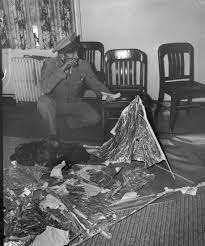
The Roswell Army Air Field public information officer, Walter Haut, released a press statement on July 8, stating they had recovered a ‘flying disc.’ However, in a swift reversal the next day, the Commanding General of the Eighth Air Force, Roger Ramey, declared that the debris came from a weather balloon. He explained it as a common weather device known as a ‘rawin target reflector,’ used to track meteorological conditions.
This abrupt switch in narratives birthed countless conspiracy theories. Some believed it was a cover-up attempt by the government to mask an extraterrestrial event. The critics of the weather balloon theory argue that highly-trained military personnel could not mistake such a common device for a ‘flying disc.’
For nearly 30 years, the incident faded from public attention until 1978. The resurgence was largely due to nuclear physicist and ufologist Stanton Friedman, who interviewed Major Marcel. Marcel claimed that the debris he recovered was “not of this world.” This kickstarted renewed interest, with books, documentaries, and even television shows speculating about what had really happened in Roswell in 1947.
In response to public scrutiny and Congressional inquiries, the U.S. Air Force published two reports in 1994 and 1997. The first report reaffirmed that the debris was from a weather balloon. However, in an interesting twist, the 1997 report revealed that the balloon was part of a top-secret project named ‘Mogul.’ Project Mogul aimed to detect sound waves from potential Soviet atomic tests.
In the second report, the Air Force addressed claims of ‘alien bodies’ recovered from the site. The supposed bodies were attributed to anthropomorphic test dummies used in high-altitude parachute drop tests conducted during the 1950s.
Over 75 years later, the Roswell Incident continues to spark curiosity and controversy. Despite government reports and scientific analyses, the event remains a mystery wrapped in an enigma, drawing UFO enthusiasts, skeptics, and conspiracy theorists alike. Regardless of one’s beliefs, the story of Roswell has permanently cemented itself into American history and continues to be a testament to the human fascination with the unknown and the endless expanse beyond our blue planet.


 northamericanmysteries.com
Leave a comment